

Prague by Night: What the River Looks Like After Dark
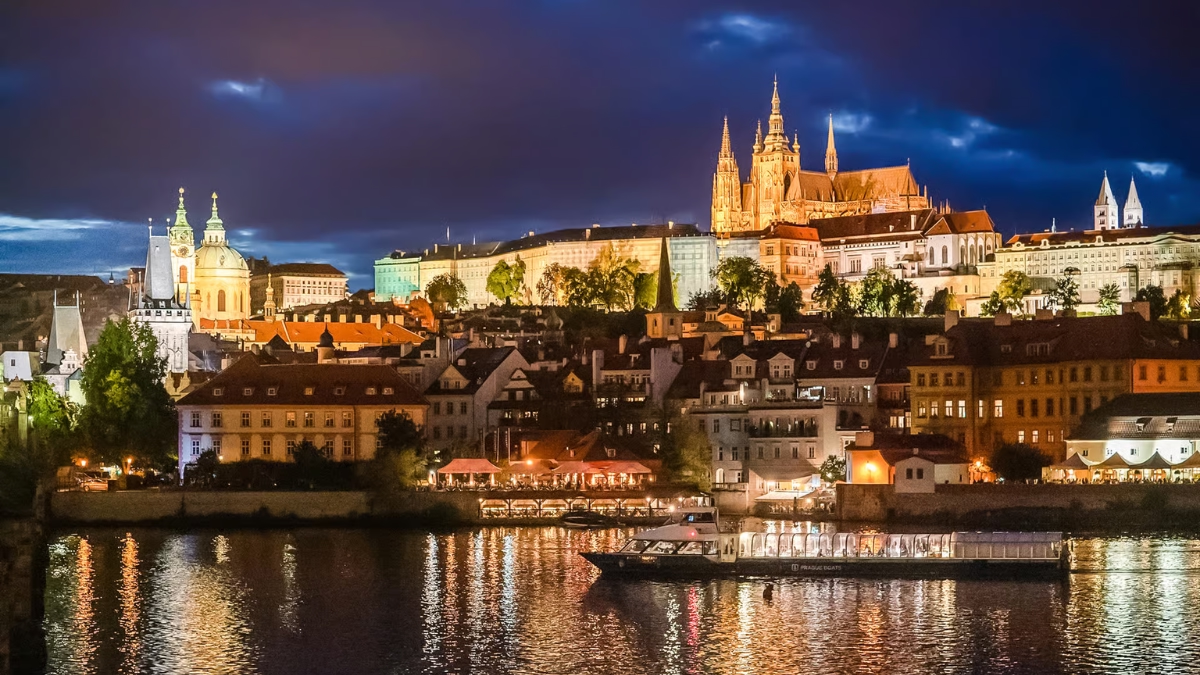
At night, Prague’s riverfront is transformed by floodlighting that illuminates Prague Castle across the full Hradčany ridge, both towers of Charles Bridge and the baroque statues along its parapet, the Dancing House’s glowing glass tower, Petřín Hill and its lookout tower, Vyšehrad fortress, and the decorated facades of the historic embankment buildings. These are reflected in the dark surface of the Vltava in a way that daylight never replicates. An evening river cruise — departing around sunset and sailing into full darkness — is the most consistently cited highlight of any Prague visit by travellers who have done it.
There is a version of Prague that exists only after dark. The city’s buildings are lit from below rather than above; the stone of Charles Bridge catches warm amber light; the castle becomes a silhouette of towers and spires against a dark sky; and the Vltava becomes a mirror, doubling everything in reflection. This is the Prague that evening river cruise passengers see from the middle of the river — and it is categorically different from anything visible from the streets.
The Transition: Dusk to Dark
The most atmospheric time on the Vltava is the hour either side of sunset — when the sky is still warm but the city’s floodlighting has begun to come on, and the two light sources compete for dominance over the buildings and the water. The castle’s limestone turns amber under the late sun; the bridge towers begin to glow from their internal illumination; and the river surface shifts from the warm gold of reflected sky to the dark mirror of reflected artificial light.
This transition — which the best evening cruises are timed to capture — is what makes the Vltava after dark genuinely different from the standard city-at-night experience. In most cities, night means darkness punctuated by street lighting. In Prague, night means an architectural theatre production: every significant building has been designed for its nocturnal presentation, and the floodlighting on the left bank alone — the castle, the cathedral, the Malá Strana church towers — creates a coherent composition that appears designed rather than accumulated.
Visitors consistently remark that the river reflection is what surprises them most. At water level on a still evening, the illuminated buildings appear twice: once on the skyline above, and once in the dark water below. Charles Bridge with its lit towers reflected in the Vltava is one of those views that photographers wait for and visitors remember.
Buy This TicketWhat Is Illuminated: Building by Building
Prague Castle
Prague Castle in floodlight is the dominant visual element of the nocturnal Vltava panorama. The entire Hradčany ridge — 570 metres of fortifications, palaces, and cathedral — is lit from below and sides, creating a silhouette that defines the left-bank skyline throughout the cruise. The St. Vitus Cathedral spires glow pale gold; the palace buildings are amber; the fortification walls pick out the ridge’s contours.
The castle’s floodlighting was designed to make its scale and complexity legible at night in a way it is not during the day — when the individual buildings blend into the hillside. At night, each element is separately illuminated and the full sequence from east to west is visible and readable. From the river, this translates to a panoramic architectural display that most visitors regard as the most impressive single view of the cruise.
Charles Bridge
Both towers of Charles Bridge are floodlit, with the Gothic stonework of the Old Town Bridge Tower particularly dramatic at full illumination. The baroque statues on the parapet are picked out in warm light, and passing beneath the arches at night — the lit stone visible overhead, the towers visible at each end — is one of the definitive moments of the evening cruise experience.
The reflection of Charles Bridge in the Vltava is the photograph that defines Prague at night. At water level, the full arch sequence and both towers appear in the dark river below; above, the statues are silhouetted against the lit stone of the parapet. No photograph taken from the bridge itself can achieve this view — it exists only from the middle of the river.
The Dancing House
The Dancing House’s glass tower glows from within at night, its interior illumination creating a warm light that radiates through the curved glass facade. Against the dark classical facades of the buildings on either side, the glowing tower is one of the most striking elements of the nocturnal right-bank skyline — simultaneously modern and somehow fitting in the illuminated ensemble of the historic embankment.
Unlike the historicist buildings around it, which are lit from outside by floodlights, the Dancing House is lit from within — an effect that makes it look alive rather than merely displayed. For more on the building’s history and design, see Dancing House & the Modern Prague Riverfront.
Petřín Hill and the Lookout Tower
Petřín Hill rises above the left bank behind Malá Strana throughout the northern section of the cruise route. The Petřín Lookout Tower — Prague’s miniature Eiffel Tower, built in 1891 — is illuminated at night and visible on the hilltop throughout much of the central city route. When lit against a clear night sky, it provides a vertical landmark that anchors the left-bank view above the castle.
The combination of the castle’s horizontal sprawl across the Hradčany ridge and the vertical punctuation of the Petřín Tower above Malá Strana creates one of the most visually complete left-bank night panoramas in Central Europe.
Vyšehrad
Vyšehrad on the southern bend of the river appears at night as a cliff-top basilica above a dark rock face. The twin spires of the neo-Gothic Basilica of St. Peter and Paul are illuminated, and the overall effect — a single Gothic church above a sheer cliff above the dark river — is one of the more atmospheric night-time images visible on the extended cruise routes.
See Vyšehrad: Prague's Forgotten Fortress for the full historical context.
The Embankment Buildings
The right-bank embankment buildings — National Theatre, the Rudolfinum, the Mánes Gallery, and the sequence of 19th-century riverside facades — are all lit at night, creating a continuous illuminated strip along the east bank of the river. The National Theatre’s gilded roof catches the light particularly well; the Rudolfinum’s colonnade creates a classical backdrop to the northern section of the route.
Buy This TicketThe Reflection Factor
On a calm evening, the Vltava surface reflects the entire illuminated skyline — Prague Castle, Charles Bridge, and the embankment buildings appearing twice, once in the air and once in the water. This reflection effect is at its most intense in late autumn and winter, when the air is clear and the river is undisturbed by pleasure boats and other traffic.
The reflection is not a guaranteed feature of every cruise — wind creates surface disturbance that breaks up the images, and heavy boat traffic has the same effect. The calmer the water, the more mirror-like the reflections. Still autumn and winter evenings tend to produce the best reflection photography; summer evenings are often noisier on the water but compensate with the golden-hour dusk light.
Best Cruises for the Night View
For the nighttime Vltava experience, the following cruises are the most appropriate choices:
For the most atmospheric short experience: Evening Sightseeing Prague River Cruise — 50 minutes, departs at dusk, captures the golden-hour to full-night transition.
For a complete evening with dinner: Prague Sightseeing Dinner Cruise with Drinks — 3 hours, glass boat with panoramic windows, 7 PM departure, pianist and singer. The window seats place you directly beside the illuminated waterfront for the full duration.
For the most comprehensive illuminated route: Vltava River Night Cruise with Buffet — 3 hours, extends south to Vyšehrad and north past the Rudolfinum, covering the widest range of illuminated landmarks.
For the most intimate evening: Prague Live Jazz Dinner Cruise — 2.5 hours, small boat (30–40 seats), three sets of live jazz. The music and the night views combine in an unusually atmospheric way.
For a drink and the dusk: Vltava River Eco Cruise with Prosecco — 50 minutes, silent electric eco-boat, Prosecco included. The quiet boat makes the evening experience noticeably more refined.
When Is the Best Time?
The optimal departure time for the night view is just before sunset — typically 7:00–8:00 PM in summer, 5:00–6:00 PM in autumn, and 4:00–5:00 PM in winter. This captures the golden-hour transition from warm dusk light to full floodlighting during the cruise, rather than arriving on board after darkness has already fallen.
The premium evening departures on the most popular cruises are timed with this in mind — most standard 7:00 PM dinner cruise departures are positioned to catch the dusk and sail into darkness, rather than departing after dark when the transition is already complete.
For seasonal guidance on the best time to take an evening cruise, see Best Time of Year to Take a Prague River Cruise.
Photography Tips for Night Cruises
The moving boat and low light create specific challenges for night photography. A few practical notes:
- Use your phone’s Night Mode if available — the computational photography in modern smartphones handles low light on water better than standard mode
- Brace against the railing to reduce camera shake on longer exposures
- The best shots are from the open upper deck — glass windows create reflections that degrade image quality
- Charles Bridge from beneath the arches requires a fast shutter; the brief passage through is the most photographically challenging moment of the cruise
- The reflection shots work best when the boat is stationary or moving slowly — near the piers at the start and end of the cruise
Frequently Asked Questions
What is the best Prague river cruise for seeing the city at night?
The Prague Sightseeing Dinner Cruise with Drinks on the glass boat is the premium option — 3 hours, panoramic windows, 7 PM departure catching the full dusk-to-night transition. For a shorter experience, the Evening Sightseeing Prague River Cruise at dusk is the best-value single-experience recommendation.
Is Prague Castle lit up at night?
Yes, with a full floodlighting system across the entire Hradčany ridge — cathedral spires, palace buildings, fortification walls, and towers. The floodlighting comes on around sunset and runs until midnight. See Prague Castle from the Water for the detail of what is illuminated.
Are Charles Bridge and its statues illuminated at night?
Yes. Both Gothic towers of Charles Bridge are floodlit, and the bridge surface has ambient lighting that picks out the baroque statues along the parapet. The reflection of the lit towers in the Vltava is one of the most photographed views in Prague.
What time does Prague’s floodlighting come on?
The main floodlighting of Prague Castle and Charles Bridge typically switches on around sunset, which varies from approximately 4:00 PM in December to 9:00 PM in late June. Most dinner cruise departures around 7:00–8:00 PM are timed to catch the transition from golden-hour dusk to full illumination.
Is it worth doing a Prague river cruise specifically for the night views?
Consistently yes. The illuminated castle reflected in the Vltava is one of Europe’s most striking urban night views, and the river is the only place it can be seen as a single panoramic image. Visitors who take both a daytime and an evening cruise almost universally rate the evening view more memorable.
