

Dancing House & the Modern Prague Riverfront
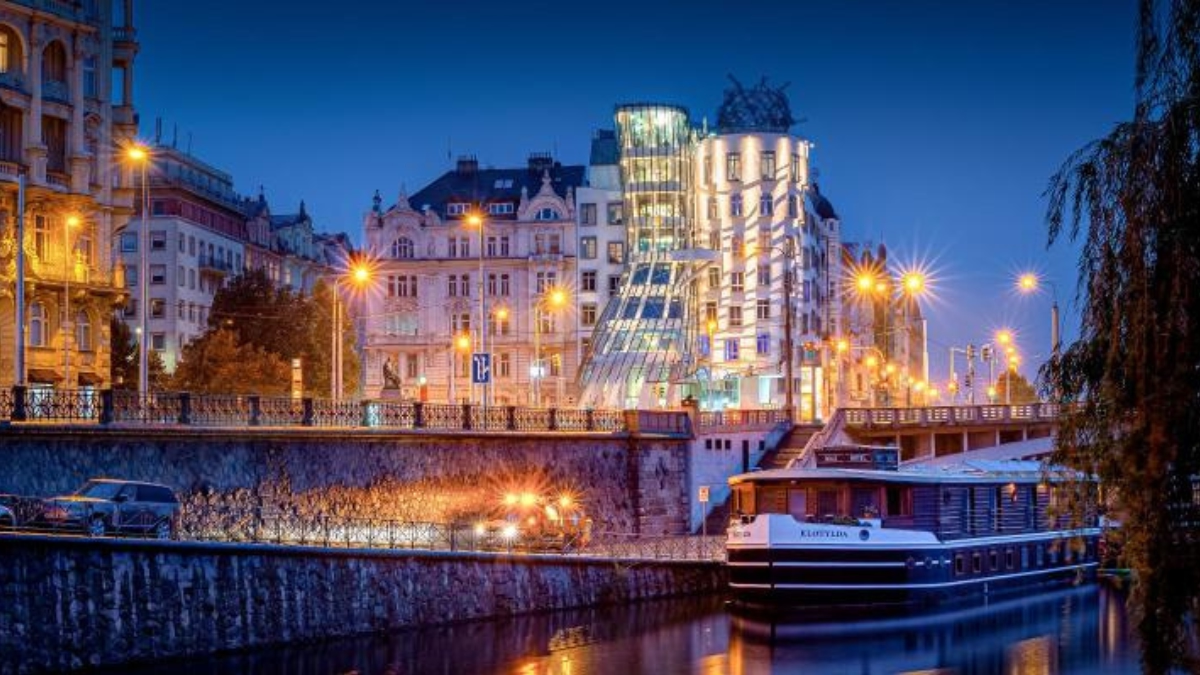
The Dancing House (Tančící dům), also known as Fred and Ginger, is a deconstructivist building on the right bank of the Vltava River at Rašínovo nábřeží, completed in 1996. It was designed by Croatian-Czech architect Vlado Milunić in collaboration with Canadian-American architect Frank Gehry, and was commissioned by Dutch insurance company Nationale-Nederlanden on a plot destroyed by US bombing in 1945. The building’s two towers — one solid stone, one fluid glass — are intended to represent two dancers, inspired by Fred Astaire and Ginger Rogers. From the Vltava, the glass tower’s distinctive silhouette is visible throughout the southern section of the cruise route.
There is a particular quality to the Dancing House when you see it for the first time from the Vltava. It arrives between two neoclassical buildings on the right bank — Art Nouveau facades on both sides — and then suddenly there it is: a glass tower apparently leaning into its stone partner, its curved surface reflecting the sky and the river in an endlessly shifting composition. It is the moment on the cruise when the city’s architecture stops being historical and becomes something else — proof that Prague does not live only in the past.
The Origin Story
The Dancing House stands on a plot at Rašínovo nábřeží that was destroyed by US bombing on 14 February 1945 — one of several buildings in the neighbourhood that were struck by bombs intended for a railway junction further north. The site remained vacant or decrepit for over thirty years. In 1986, Václav Havel — then a dissident living in the neighbouring building — began discussing with his friend and architect Vlado Milunić what might be built on the empty plot. He imagined a cultural centre with a library, theatre, and café. What was eventually built was something rather different.
The Dancing House was built in 1992–1996. It was designed by the Croatian-Czech architect Vlado Milunić in cooperation with Canadian-American architect Frank Gehry on a vacant riverfront plot. Construction, carried out by BESIX, was completed in 1996.
When the Dutch insurance company Nationale-Nederlanden bought the plot, they selected Milunić as lead designer but asked him to collaborate with a world-renowned architect to help the project gain approval. Milunić first approached French architect Jean Nouvel, who declined due to the small site. His second choice was Frank Gehry, who accepted — reportedly saying he “would do anything for the country that gave America Jaromír Jágr” (the legendary Czech ice hockey player). The collaboration between Milunić and Gehry produced one of the most discussed buildings of the 1990s.
Fred and Ginger: The Design
The building consists of two towers. The stone tower — representing the male dancer Fred Astaire — is solid, angular, and anchored. The glass tower — representing the female dancer Ginger Rogers — is fluid, curving, and apparently in motion, leaning into its stone partner with a dynamic tilt. The design was intended to symbolise Czechoslovakia’s transition from communist rigidity to democratic openness — the static and the dynamic in dialogue.
Gehry originally called the building “Ginger and Fred” after the famous dancing couple, but later distanced himself from the name, reportedly concerned about importing “American Hollywood kitsch” to Prague. The Czech nickname Tančící dům (“Dancing House”) has become the standard reference, while the restaurant on the seventh floor retains the “Ginger & Fred” name in the original spirit of the design.
The building is nine storeys tall with two floors below ground. The facade of the glass tower consists of 99 prefabricated reinforced concrete panels — each one unique — covered with wrinkled lines inspired by the waves of the Vltava. The curves were developed using aerospace software, making the Dancing House the first building in the world designed with CATIA 3D software; the same tools Gehry later used on the Guggenheim Museum Bilbao.
On top of the glass tower sits a structure called “Medusa” — a tangled crown of twisted metal tubing and wire mesh placed there at the building’s inauguration.
The Controversy
When it opened in 1996, the Dancing House divided Prague. Architectural traditionalists and heritage advocates argued that a deconstructivist building had no place among the Baroque, Gothic, and Art Nouveau structures of this historic riverfront district. Václav Havel, by then President of the Czech Republic, supported the project publicly — but the debate was heated.
The objections were understandable from a preservationist perspective. The Rašínovo nábřeží is one of Prague’s most harmonious embankment stretches — a continuous sequence of late 19th and early 20th-century buildings in broadly compatible styles. The Dancing House breaks that sequence decisively. For those who valued the continuity, the intrusion was jarring.
Over time, the debate has settled. The building has become an unshakeable icon of Czech contemporary architecture and a symbol of new Prague, just as Charles Bridge symbolises old Prague. In 1997, Time magazine included it among the most important buildings of the decade. It appears on the 2,000 Czech Koruna note. And from the river — which is its natural vantage point — the contrast between the glass tower and the classical facades on either side is one of the most visually arresting moments of any Vltava cruise.
From the River: The Best View
The best view of the Dancing House is from the Vltava itself — from the river, you see the building in full profile, with the glass tower in its entirety and the contrast with the flanking classical buildings at maximum effect. At night, the glass tower is lit from within and becomes one of the most distinctive landmarks on the illuminated cruise route.
From street level, the Dancing House is experienced as a corner building — you see one face at a time, and the full dynamic composition of the two-tower design is difficult to grasp. From the river, the building appears as a single object set against the embankment, and the intended relationship between the two towers — the curved glass leaning into the stone — is immediately legible.
In the evening, the glass surfaces catch and reflect the changing light of dusk. At night, the interior illumination turns the glass tower into a glowing lantern on the right bank — one of the most photographed elements of the nocturnal Prague riverscape.
Buy This TicketVisiting the Dancing House
The building is open to visitors. On the seventh floor, the Ginger & Fred Restaurant and bar offer panoramic views of the Vltava River, Charles Bridge, and Prague Castle — arguably the best 360° view of the city from any rooftop accessible to the public. The Dancing House Gallery (contemporary art) occupies the lower floors.
Address: Rašínovo nábřeží 80, Praha 2 Getting there: Tram 2, 9, 17, 22 to Jiráskovo náměstí; or Metro Line B (Národní třída) + 10-minute walk along the embankment Rooftop restaurant: Open daily; reservation recommended for the Ginger & Fred restaurant
The building sits on the same stretch of embankment as some private charter cruise departure points — see How to Get to the Prague River Cruise Departure Points for the Rašínovo nábřeží / Náplavka area directions.
Frequently Asked Questions
Who designed the Dancing House in Prague?
Croatian-Czech architect Vlado Milunić in collaboration with Canadian-American architect Frank Gehry. Milunić originated the concept and brought Gehry on board after Jean Nouvel declined due to the small site. The building was completed in 1996.
Why is the Dancing House called Fred and Ginger?
Gehry originally named the building “Ginger and Fred” after the famous dancing duo Fred Astaire and Ginger Rogers, inspired by the design’s two towers: a solid stone tower (Fred) and a fluid glass tower (Ginger). He later distanced himself from the nickname, concerned about importing “Hollywood kitsch” to Prague.
Can you visit the Dancing House rooftop?
Yes. The Ginger & Fred Restaurant on the 7th floor is open to the public and offers panoramic views of the Vltava, Charles Bridge, and Prague Castle — one of the best 360° rooftop views in the city. The Dancing House Gallery occupies the lower floors.
Is the Dancing House visible from Prague river cruises?
Yes — it is one of the most distinctive landmarks on the right bank of the Vltava, visible throughout the southern section of the standard cruise route. At night, the glass tower is lit from within and glows prominently against the classical facades on either side.
Was the Dancing House controversial?
Yes, significantly so when it opened in 1996. Czech architectural traditionalists argued it was incompatible with the historic embankment setting. Václav Havel — who had proposed the project — supported it publicly despite the opposition. The debate has since settled; the building is now an unshakeable icon of Czech contemporary architecture and appears on the 2,000 Czech Koruna note.
